
New seeds planted
We continue improving the portfolio

In my journey as an investor I began to realize how important is thinking about the portfolio as a whole, rather than focusing my attention on each individual holdings. This perspective allows me to better see which tailwinds or risk I´m exposed to through any of my companies. Also it helps me identify which tailwinds or mental models I´m not exposed to and, therefore start looking there. For eg this process helped me to realize I had little to no exposure to the aerospace & defence industry, and to be careful about companies that rely on hyperscalers capex since I already own some hyperscalers so I could end up duplicating this source of risk.
As I said in one of my latest posts, my companies tend to fall between two buckets: core positions and optionality positions. I consider all my companies are well run, high cash profitable companies but the quality profile is different among them. I cannot compared Meta business model with Medpace. Both companies are extraordinary in my opinion (especially if we talk about management) but Meta business is higher quality than Medpace.

Since I wrote that post I have added more aspects to my buy/selling process:
I do a breakdown between sources of tailwinds, optionality and risks at the company level. Then I compare that to how the current portfolio looks like.
Before buying any new company I should answer the following question: why should I buy it now? Why not buy it in 3 months? Or 1 year ago? The rationale behind this “filter” is to identify which opportunities have emerged due to negative market feeling or new optionality option in place rather than buying a new company because I feel FOMO or I´m just bored after 1 month without doing anything and see people buying/selling everyday. It can sounds smarter or more exciting to take decisions every day, but true savvy comes from deciding to do nothing. I have added new companies in my portfolio such as META thanks to market capex fear. I could not buy this wonderful company some time ago when the narrative was extremely positive after crazy stock price rally.
All said, let’s my talk a bit about some companies which I’ve added to the portfolio:
Meta platforms. Zuckenberg & co are building the next step of Meta thanks to AI investments. The company is building its own computing capacity in order to train their its own models, with the ultimate goal of enhancing existing apps and creating new products that drive ad revenue. Meta is pursuing a different strategy than other players making its LLM open source and not selling (yet) computing capacity to external parties. Meta thesis is full of optionality and I trust management to exploit them with a long term mentality. I was able to buy Meta after market is fearing they’re overspending in capex and they won’t be able to monetize it. It’s defintely a risk worth watching but it’s relevant to notice that Meta is already monetizing this capex. AI business segment is already making billions of revenue growing much faster than the vast majority of any public company meanwhile the core business is improving as well. One thing I will monitor, as a shareholder and user of meta apps, is that AI-generated content doesn’t make the apps worse. Audiences can become saturated by too much content or low quality content.
 Boring_Business@BoringBiz_Meta Instagram Reels is currently doing $50B of run rate revenue Just Reels alone makes more revenue than Netflix, Nike, Coca Cola, Visa, Spotify, Uber and Airbnb Let that sink in8:24 PM · May 29, 2026 · 618K Views106 Replies · 367 Reposts · 7.75K Likes
Tasmea limited. I have been following Australian mining & fixed infrastructure repair and maintenance space for a while due to Mader Group and I started last December a position in one of their competitors. Tasmea has a different playbook than Mader as they focus on consolidating the industry through M&A and then start a cross-selling strategy which brings organic growth to the acquired companies. They’ve been very successfull so far and one aspect I really appreciated is that Tasmea management let the acquired companies to run independently. I believe entrepreneurship is a key trait from many successfull companies and I look for it in my holdings. I was able to buy this company due to market fear of their last acquisition which it differs from their usual bread and butter strategy. I will monitor this operation closely but I trust the management due to skin in the game. Stephen Young, CEO, owns 38,5% of the outstanding shares.
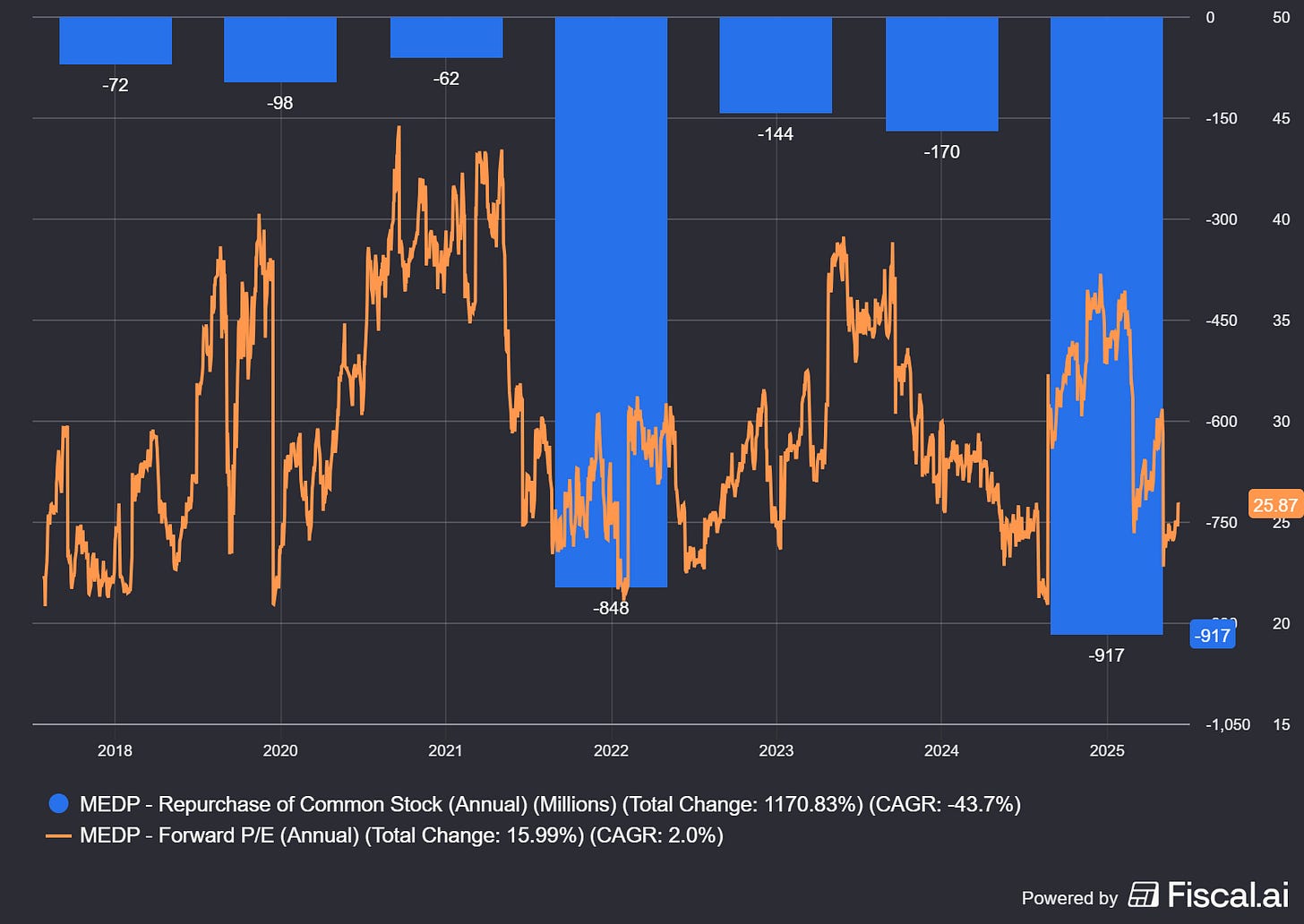
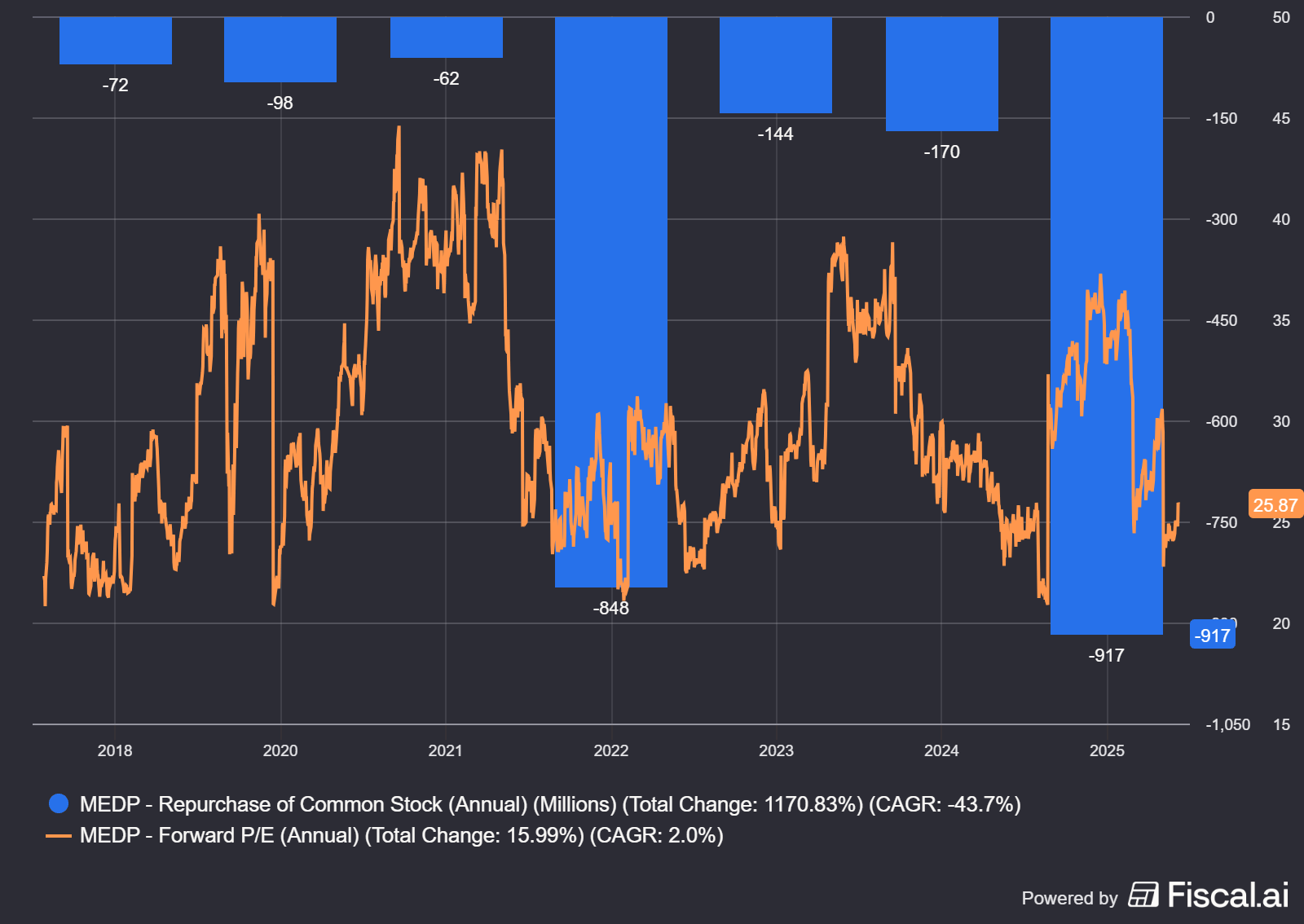
Medpace. I arrived to this company looking for healthcare exposure as I think AI will be a huge tailwind for this industry. Research and development cost will go down, improving economic of scales in a industry where fixed costs are inherently very high due to the nature of the business model. I thought initially to have exposure using an ETF as my knowledge of the industry is very limited. However, I found Medpace which it’s a relatively easy company to understand, but what really stood out to me was the CEO and founder, August Troendle. He has founded and scaled the company to over $2B revenue using a organic approach. The best thing about Medpace is its capital allocation. As you can see below, August & co don’t hesitate when it comes to buybacks. This aspect makes me feel more confident about one company I’m still learning about as I deal with a management team which knows very well what they’re doing. If the research and development costs will go down thanks to AI, then access for new or small companies to develop drugs will be better than ever. Well, this is the segment where Medpace works.
Mastercard. I used to own Visa in the past but I sold it due to a rich valuation. However, I was able to buy Mastercard at 4% FCF yield as the market fears that stablecoins, AI agents and Account to Account payments will disrupt Visa and Mastercard. You shouldn’t ask your barber if you need a haircut, but both management teams deny that they’ll be disrupted and also they claim they will enjoy tailwinds going forward. They’ve added stablecoins, crypto and agents to its payment railway and the results from the latest quarters show no sings of disruption. The biggest tailwind from what I read in the calls is agentic driven spend. The thesis is that people & business will set up AI agents to automate purchasing decisions. For eg, if I want to buy a certain book, I will establish an agent order to buy it at a specific price. Then the agent will monitor the market and purchase it wherever it matches my request. This should create a new wave of digital transactions that did not exist before and will bring more volume to Visa & Mastercard. I will monitor Account to Acccount payment risk and national payment systems going forward, but if digital payments are based on trust and 24/7 operatibility, I don’t see any company reaching Visa or Mastercard level. Lastly, I have exposure to Mastercard as I think they should benefit from the payment tailwinds I described plus greater exposure to less developed countries where digital payments are still lower than in USA & Europe.

I have starter positions in Landbridge and Safran as well but I’m early innings yet of my research and I don’t feel good writing about companies which combined weight less than 3% of my portfolio.
I hope you’ve enjoyed this post.
Aitor-Sempiterno Investments.
Disclaimer
This article is not and does not intend to be a recommendation to buy and/or sell. Each person should do their own research before making an investment decision.
Duplicating source of risk is a good one. Diversification is so much more than number of positions, it's also about having upside optionality, but also downside protection in terms of not duplicating risks. Best thing in volatile times is not seeing all positions't correlate together (unless everything goes up..)